Decking - Types, Costs & Guides for UK Homeowners
Garden decking is one of the most popular outdoor improvements in the UK. A typical deck costs between £1,500 and £4,500 to install, depending on whether you go for treated softwood, hardwood, or composite boards. The right choice of material makes a big difference to how long it lasts and how much upkeep it needs.
Quick answer
How much does decking cost?
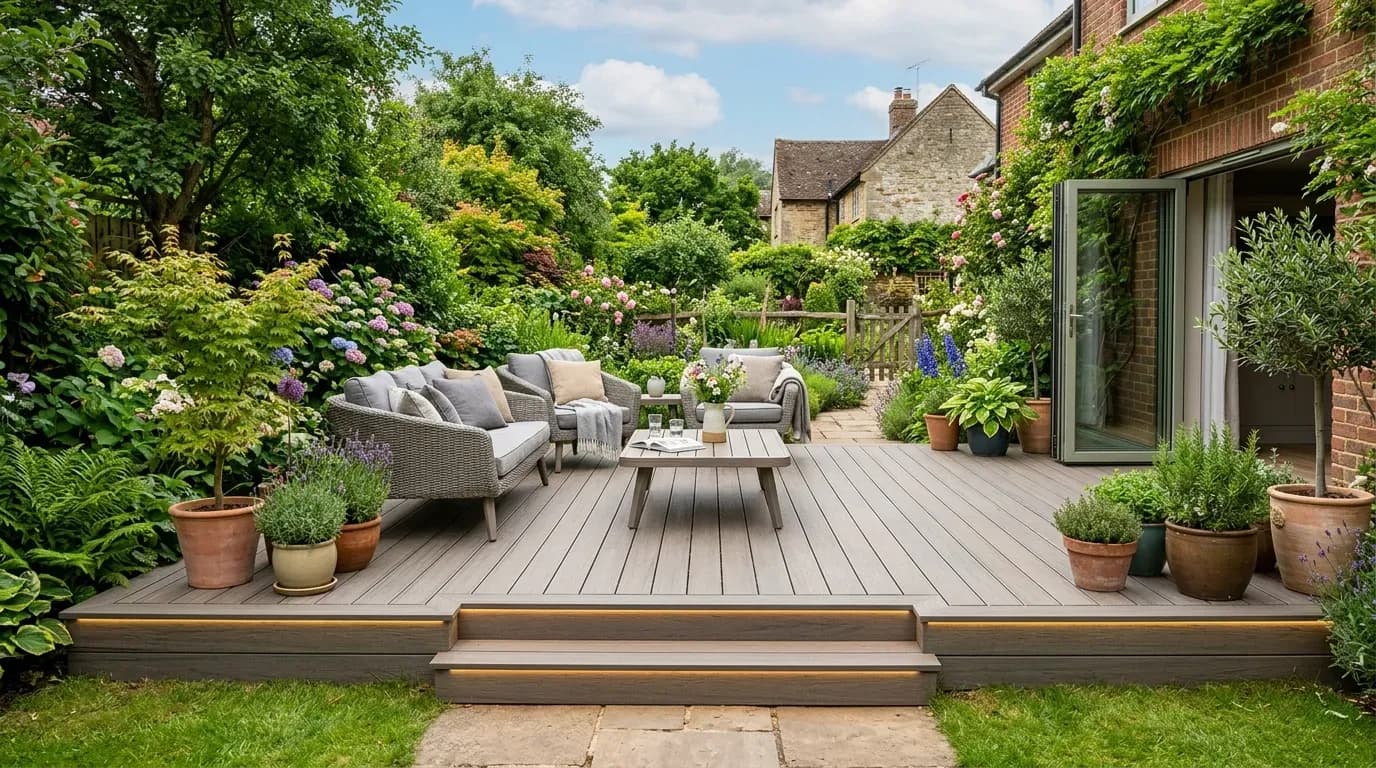
Softwood decking costs £70 to £110 per m² installed. Composite runs £90 to £160 per m². Hardwood costs £130 to £200+ per m². For a typical 15 to 20m² deck, expect to pay £1,200 to £3,500 depending on the material.
View the full decking cost guideComposite vs timber decking
This is the first decision most homeowners face. Both have clear advantages and drawbacks, and the right choice depends on your budget, how much maintenance you want to do, and how long you plan to stay in the property.
Timber (softwood or hardwood)
- Softwood: £70 to £110 per m² installed
- Hardwood: £130 to £200+ per m² installed
- Natural look and feel underfoot
- Easier to cut, shape, and repair on site
- Needs annual oiling or staining
- Softwood lifespan: 10 to 15 years with treatment
- Hardwood lifespan: 20 to 30 years
- Can become slippery when wet (anti-slip treatment helps)
Composite (wood-plastic composite)
- £90 to £160 per m² installed
- Does not rot, warp, splinter, or need treating
- Lifespan: 25 to 30 years
- Most brands offer 20 to 25 year warranties
- Virtually maintenance-free
- Can feel less natural underfoot than real wood
- Retains more heat in direct sun
- Harder to modify or repair on site
For most homeowners, mid-range composite offers the best value over time. The higher upfront cost is offset by the maintenance you avoid. If budget is tight and you do not mind the annual upkeep, pressure-treated softwood is perfectly serviceable for 10 to 15 years.
Typical deck sizes
Deck sizes vary a lot depending on your garden and what you want to use the space for. Here are the most common sizes and what they work well for.
Small deck (8 to 12m²)
Enough for a bistro table and two chairs, or a couple of loungers. Works well in smaller gardens or as a step-out area from patio doors. Typically costs £700 to £1,800 depending on material.
Medium deck (15 to 20m²)
The most popular size. Fits a table and chairs for four to six people comfortably, with space for a barbecue area. This is the sweet spot for most UK back gardens. Typically costs £1,200 to £3,500.
Large deck (25 to 40m²)
Space for separate dining and lounging zones. Can include built-in seating, planters, or a hot tub area. More common in larger gardens or when the deck wraps around part of the house. Typically costs £2,500 to £7,000+.
Decking maintenance
How much maintenance your deck needs depends entirely on the material. Here is what to expect.
Softwood decking
Needs the most care. Oil or stain it once a year, ideally in late spring when the wood is dry. Apply anti-slip treatment in autumn before the wet season. Sweep off leaves regularly as they trap moisture and cause algae. Replace any split or rotten boards promptly to stop damage spreading.
Hardwood decking
Needs less attention than softwood but still benefits from annual oiling to maintain its colour. Left untreated, hardwood turns a silver-grey over time. Some people prefer this weathered look. Anti-slip treatment is less necessary as hardwood is naturally less slippery.
Composite decking
The big selling point is minimal maintenance. A brush down with soapy water once or twice a year is all that is needed. No oiling, staining, or treating required. Composite boards do not splinter, rot, or warp. The only downside is that scratches are harder to repair than on timber.
Planning permission and Building Regulations
Permitted development (no permission needed)
Most garden decking falls under permitted development and does not need planning permission. Check the full rules on the Planning Portal's decking page at planningportal.co.uk. The key rules are: the deck must be no more than 30cm above ground level, it must not cover more than 50% of the garden (including sheds and other structures), and it must not be in front of the house facing a highway.
When you do need planning permission
Raised decking over 30cm above ground level may need planning permission. Decking on a listed building or in a conservation area often requires permission regardless of height. If your property has had its permitted development rights removed (common on new-build estates), you will need to apply. A quick call to your local council planning department will confirm.
Building Regulations for raised decks
A deck over 600mm above ground level needs a balustrade at least 1,100mm high for safety. The structure must be sound enough to support the load. If the deck is attached to the house, it must not bridge or compromise the damp-proof course. Raised decks should really be designed or checked by someone who understands structural loading.
Good to know: Check the Planning Portal decking guidance for the full permitted development rules. Even if you do not need planning permission, it is worth checking your title deeds for any covenants that restrict garden structures. Some new-build properties have restrictive covenants that go beyond standard planning rules.
How to find a good decking installer
Look for a specialist, not a general builder
A dedicated decking installer or landscape carpenter will have the right tools, buy materials at trade prices, and know the common pitfalls. Ask how many decks they install per month. If the answer is less than two, they are probably not a specialist.
Get a detailed written quote
The quote should specify the board material and brand, sub-frame material (treated timber or aluminium), board spacing, fixings (screws or hidden clips), whether a weed membrane is included, and whether old decking removal is covered. Without this detail, you cannot compare quotes fairly.
Check the sub-frame specification
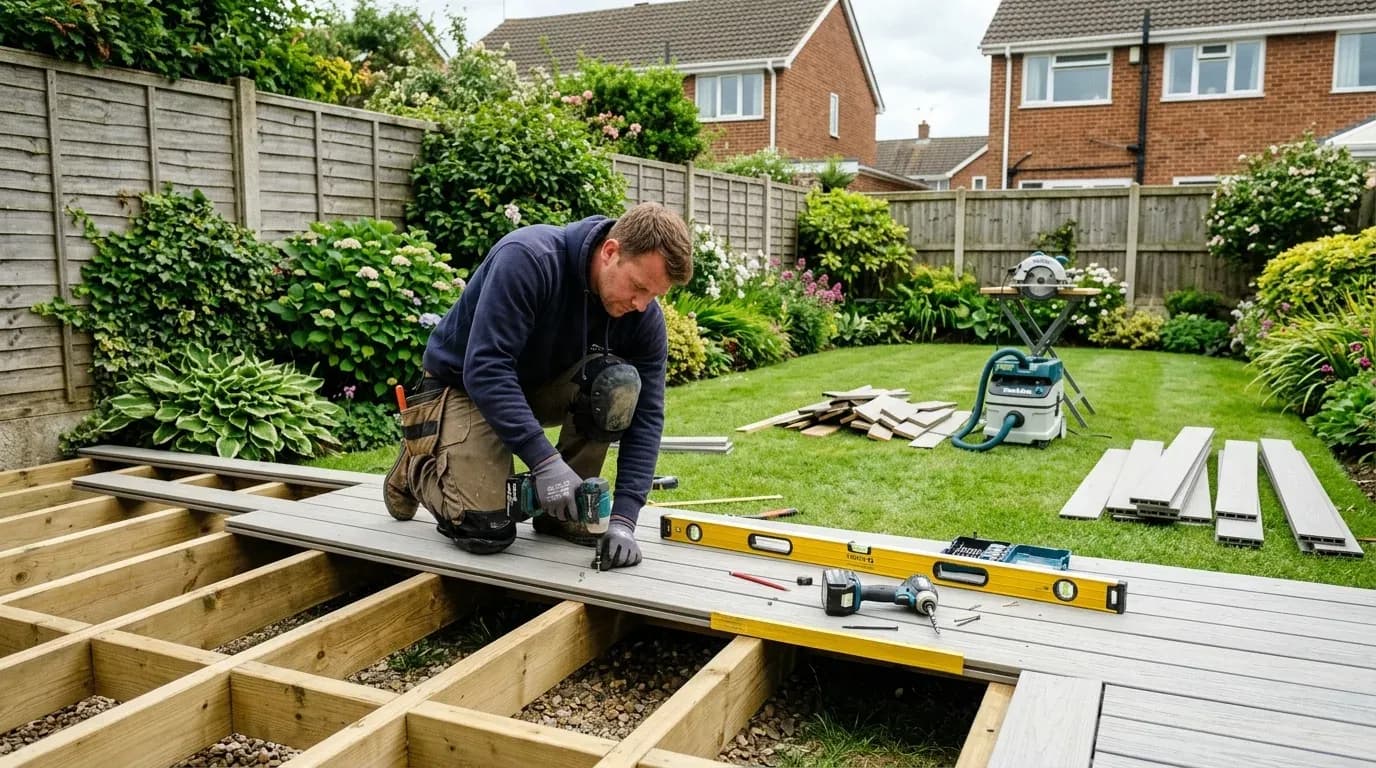
The sub-frame is the bit you cannot see, and it is the bit that makes or breaks a deck. Joists should be spaced no more than 400mm apart for most composite boards (some require 300mm). The frame should sit on concrete pads or adjustable pedestals, not directly on soil. Cheap installers cut corners on the sub-frame because you will not notice until it starts bouncing or sagging.
Get three quotes for the same spec
Decking quotes can vary significantly because of differences in board material, sub-frame quality, and what is included. Get at least three written quotes that all cover the same board brand and type, the same joist spacing and sub-frame material, and the same area in square metres. Without matching specs, you are not comparing fairly.
Look at recent photos and reviews
Ask to see photos of decks they have installed in the last three months. Check Google Maps reviews and Facebook. A good decking installer will have dozens of positive reviews with photos. Pay attention to comments about timekeeping, clean-up, and how they handled any issues.
Decking guides
Common questions about decking
Is composite decking better than timber?
It depends on your priorities. Composite decking lasts 25 to 30 years and needs almost no maintenance. Timber decking (softwood) costs less upfront but needs annual treatment and typically lasts 10 to 15 years. If you factor in maintenance costs over 20 years, composite often works out cheaper. Timber does feel more natural underfoot and is easier to cut and shape on site.
Does decking need planning permission?
Most garden decking does not need planning permission under permitted development. The main rules are: it must be no more than 30cm above ground level, it must not cover more than 50% of the garden, and it must not be in front of the house. Raised decking (over 30cm) or decking in a conservation area may require planning permission. Check with your local council via the Planning Portal if you are unsure.
How long does timber decking last?
Pressure-treated softwood decking lasts 10 to 15 years with regular maintenance. That means oiling or staining it once a year, treating it for algae and moss, and replacing any boards that split or rot. Hardwood decking (oak, iroko, ipe) lasts 20 to 30 years with less maintenance. The sub-frame often deteriorates before the boards do, so make sure the joists are treated timber or aluminium.
How much does decking cost to install?
Softwood decking costs around £70 to £110 per square metre fully installed. Composite decking runs £90 to £160 per square metre. For a typical 15 to 20 square metre deck, expect to pay £1,200 to £3,500 depending on the material. Raised decking costs 30 to 60% more because of the structural framework needed.
What size should a deck be?
A 15 to 20 square metre deck is the most common size for a typical UK back garden. That is roughly enough for a table and chairs for four to six people. A 10 square metre deck is fine for a small bistro set. If you want space for a barbecue area, loungers, and dining, you are looking at 25 to 30 square metres or more. Measure your furniture first and add a metre around each side.
Do I need Building Regulations approval for decking?
Ground-level decking under 30cm high does not usually need Building Regulations approval. Raised decking (over 30cm above ground level) may need to comply with Building Regulations, particularly for structural safety and balustrade requirements. A balustrade is legally required on any deck over 600mm above ground level. If the deck is attached to the house, it must not compromise the damp-proof course.
Quote service coming soon
Get free quotes from decking installers near you
Free, no obligation. Read the cost guide first so you know what a fair price looks like before anyone gives you a number.