Carpet Cleaning: Your Complete Guide
Carpets collect dust, allergens, bacteria, and ground-in dirt that regular vacuuming cannot shift. Professional cleaning restores the look, removes odours, and extends the life of your carpet by years. This guide covers the main cleaning methods, what they cost, and how to choose between DIY and professional treatment.
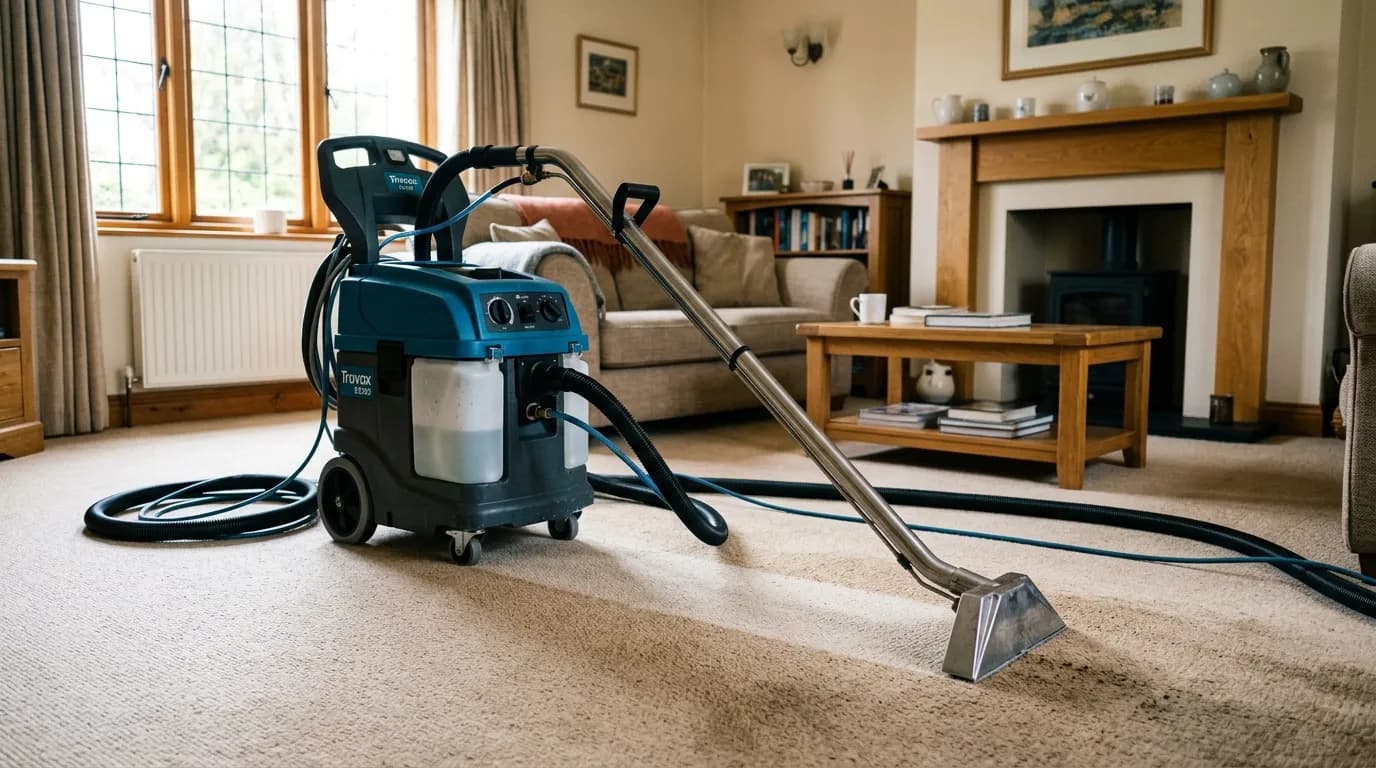
Carpet cleaning methods
Hot water extraction (steam cleaning)
The gold standard. A machine injects hot water mixed with cleaning solution into the carpet at high pressure, then immediately extracts the dirty water. Gets deep into the pile and removes the most dirt, allergens, and bacteria. Drying time is 4 to 8 hours. Recommended by most carpet manufacturers.
Dry cleaning (compound)
A dry or slightly damp cleaning compound is worked into the carpet with a brush machine, absorbs dirt, and is vacuumed out. The carpet is ready to use almost immediately. Less effective on heavy soiling but ideal for commercial settings, offices, or situations where downtime matters.
Bonnet cleaning
A rotating pad soaked in cleaning solution buffs the carpet surface. Good for a quick refresh in commercial settings but only cleans the top layer. Not suitable for deep cleaning or heavy soiling - it can push dirt further into the pile if overused.
Encapsulation
A crystallising chemical is applied and worked into the carpet. As it dries, it encapsulates the dirt particles into crystals which are then vacuumed away. Fast drying, low moisture, and leaves no sticky residue. Increasingly popular for maintenance cleans between deeper treatments.
When to clean your carpets
Every 12-18 months
Standard household with no pets or young children. Keeps carpets looking fresh and extends their life.
Every 6-12 months
Households with pets, children under 5, or anyone with asthma or allergies. Removes allergens that accumulate in carpet fibres.
Before moving in or out
End of tenancy cleaning is often required by landlords. A professional clean before moving into a new home removes the previous occupant's dirt and allergens.
After building work
Plaster dust, sawdust, and general construction dirt gets deep into carpet fibres. A professional clean after building work prevents the dust from becoming permanently ground in.
After a spill or stain
Blot fresh spills immediately with a clean cloth. If a stain sets, book a professional sooner rather than later - older stains are harder to remove.
When carpets look dull or smell
If your carpet looks flat, discoloured in walkways, or has a persistent smell, it is overdue for a deep clean.
Carpet cleaning guides
Carpet cleaning cost guide
Room-by-room prices, whole-house cleaning, stain treatment, and end of tenancy rates.
Oven cleaning cost guide
Professional oven cleaning prices - often booked alongside carpet cleaning.
Plastering cost guide
If you are redecorating, plastering costs to go with your freshly cleaned carpets.
Get at least three quotes
Carpet cleaning prices vary between companies depending on the method they use, the number of rooms, and whether stain treatment is included. Get at least three written quotes so you can compare like for like. Check whether the quote covers moving furniture, pre-treatment of stains, and deodorising, as some companies charge extra for these. A good carpet cleaner will ask about your carpet type and any specific stains before quoting. Look for technicians who are members of the National Carpet Cleaners Association (NCCA), which vets members and requires them to carry public liability insurance.
Common questions
How often should carpets be professionally cleaned?
Every 12 to 18 months for a typical household. If you have pets, young children, or anyone with allergies, every 6 to 12 months is better. High-traffic areas like hallways and living rooms benefit from more frequent cleaning. Regular professional cleaning extends the life of your carpet by removing ground-in grit that wears down the fibres.
What is the best carpet cleaning method?
Hot water extraction (often called steam cleaning) is the most thorough method and is recommended by most carpet manufacturers. It injects hot water and cleaning solution deep into the carpet, then extracts the dirty water. Drying time is 4 to 8 hours. For delicate or natural fibre carpets, dry cleaning or encapsulation may be more suitable as they use less moisture.
How long does carpet cleaning take to dry?
After hot water extraction, carpets typically take 4 to 8 hours to dry. Open windows, turn on the heating, or use fans to speed it up. Dry cleaning and encapsulation methods leave carpets ready to walk on almost immediately, which is useful for busy households or commercial settings.
Can professional cleaning remove all stains?
Most stains can be removed or significantly improved with professional treatment. Red wine, coffee, tea, and pet stains respond well. Bleach stains, paint, and some dye transfers are permanent because the carpet fibre itself has been damaged or discoloured. A good carpet cleaner will be honest about what can and cannot be fixed before they start.
Carpets looking tired?
See what professional carpet cleaning costs and how to get the best deal.
See 2026 prices