Burglar Alarms: Your Complete Guide
A burglar alarm is one of the most effective deterrents you can fit to your home. The right system can knock money off your insurance premium, give you real-time alerts when you are out, and make your property a far less attractive target. This guide covers every type of alarm, what they cost, and what to look for in an installer.
Types of burglar alarm
Bells-only alarms
The most basic type. When a sensor is triggered, a loud external siren sounds. There is no automatic notification to you or anyone else - it relies on the noise attracting attention. Cheap to install and run, with no monthly fees. Suitable for lower-risk properties or as a visible deterrent.
Monitored alarms
When triggered, the system contacts a 24/7 monitoring centre. The centre then calls you, a keyholder, or in some cases the police. This is the type most insurers prefer. You pay a monthly subscription (typically £20 to £45) on top of the installation cost, but you get a genuine response even when you are away.
Smart and wireless alarms
Systems like Ring Alarm, SimpliSafe, and Yale Sync connect to your WiFi and send smartphone notifications when triggered. Most are designed for DIY installation - you stick or screw sensors to doors and windows and pair them through an app. Monthly plans for professional monitoring and cloud recording are optional.
Wired alarm systems
All sensors, keypads, and sirens are hardwired back to a central control panel. More reliable than wireless because there are no batteries to run flat and no WiFi dependency. Harder and more expensive to install because cables need routing through walls and lofts. The preferred choice for larger properties and insurance-grade setups.
Key components of a burglar alarm
Control panel
The brain of the system. It receives signals from all the sensors and decides whether to trigger the alarm. Usually installed in a cupboard or utility area.
PIR motion sensors
Passive infrared sensors detect movement by sensing changes in heat. Fitted in hallways, living rooms, and other areas an intruder would pass through. Pet-friendly versions are available that ignore movement below a certain height.
Door and window contacts
Magnetic sensors fitted to doors and window frames. When the door or window opens, the magnet separates from the contact, breaking the circuit and triggering an alert. Simple, reliable, and the first line of detection.
External siren and strobe
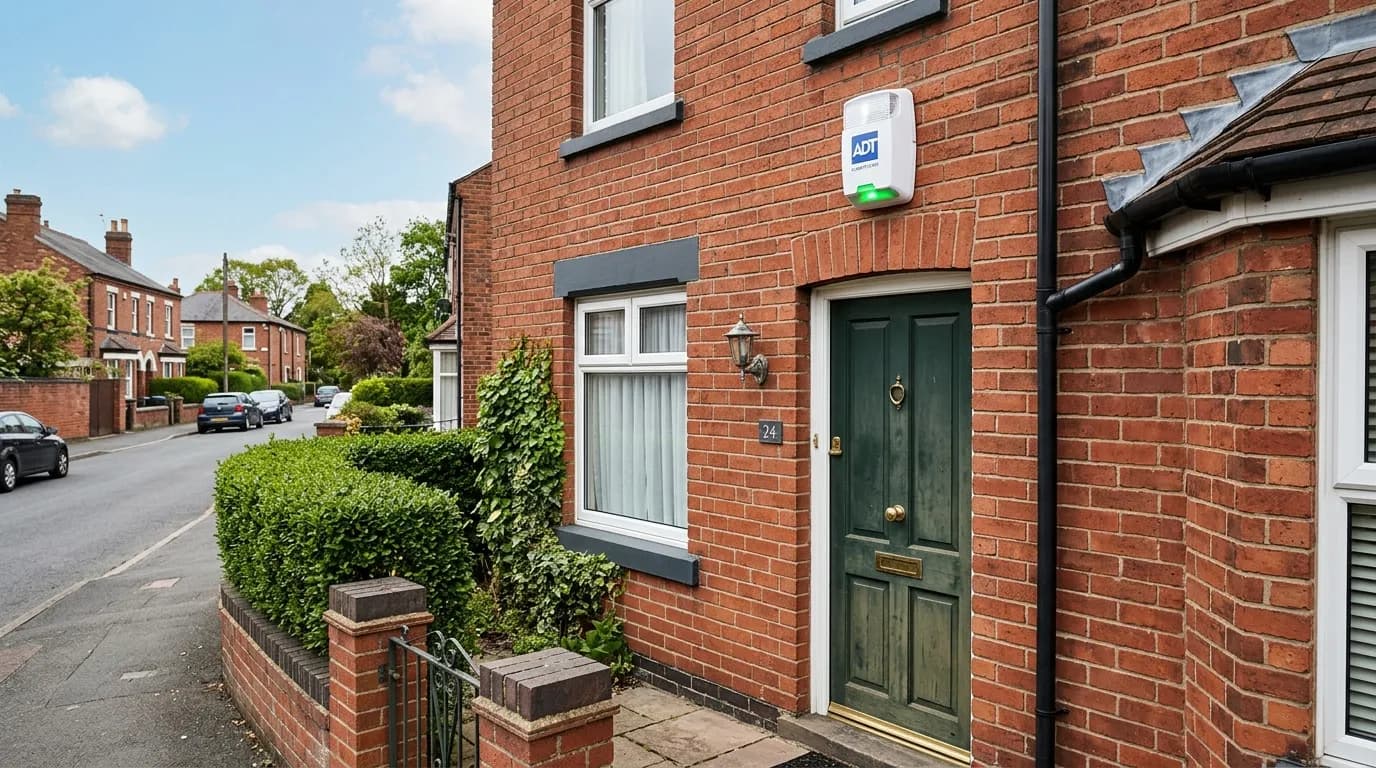
The visible box on the outside wall. It sounds a loud alarm (typically 100+ decibels) and flashes to attract attention. Even a dummy box acts as a deterrent, though insurers require a working one.
Keypad or keyfob
Used to arm and disarm the system. Keypads are mounted by the front door. Keyfobs are handy for elderly family members or anyone who might forget a code. Smart systems can also be controlled by app.
NSI and SSAIB accreditation
NSI (National Security Inspectorate) and SSAIB (Security Systems and Alarms Inspection Board) are the two main bodies that accredit alarm installers in the UK. Both are recognised by the police and the insurance industry.
An NSI Gold or SSAIB-registered installer will design your system to meet British Standard BS EN 50131. This matters because most home insurance policies that require an alarm specify that it must be installed to this standard. If you fit a system yourself or use a non-accredited installer, your insurer may not recognise it.
You can search for accredited installers on the NSI website or the SSAIB website. Always ask to see their certificate before any work begins.
Burglar alarm guides
Burglar alarm cost guide
Full pricing for bells-only, monitored, smart, and professional-grade systems. Includes monthly monitoring costs.
CCTV installation cost guide
Home CCTV prices - a common pairing with burglar alarms for comprehensive home security.
Smart home technology guide
Smart locks, doorbells, and lighting that integrate with your alarm system.
Common questions
Do I need a burglar alarm for home insurance?
Many insurers offer lower premiums if you have a working burglar alarm, and some require one for higher-value properties. An NSI Gold or SSAIB-approved system carries the most weight with insurers. A bells-only alarm may qualify you for a small discount, but a professionally monitored system - especially one that contacts a keyholder or the police - will typically reduce your premium by more. Check your policy wording, because some insurers will not pay out on a burglary claim if an alarm was required but not set.
What is the difference between bells-only and monitored alarms?
A bells-only alarm sounds a loud siren when triggered but does not contact anyone. It relies on neighbours or passers-by noticing the noise. A monitored alarm sends an alert to a monitoring centre, your smartphone, or both. The monitoring centre can then contact you, a nominated keyholder, or in some cases the police directly. Monitored systems cost more upfront and have a monthly subscription, but they provide a much faster response - especially when you are away from home.
What does NSI Gold accreditation mean?
NSI (National Security Inspectorate) Gold is an accreditation for alarm installers who meet British and European standards for intruder alarm systems. An NSI Gold installer designs, installs, and maintains your alarm to a recognised standard. This matters because most insurance companies require or strongly prefer NSI Gold or SSAIB-approved systems. If your insurer specifies a certain alarm grade, using an NSI Gold installer is the simplest way to meet that requirement.
Can I install a burglar alarm myself?
Yes, particularly smart alarm systems like Ring Alarm, SimpliSafe, or Yale Sync. These are designed for DIY installation and typically take 30 to 90 minutes to set up. You mount the sensors, plug in the base station, and pair everything through an app. However, a DIY system will not carry NSI or SSAIB accreditation, which means some insurers may not recognise it. If your insurance policy requires a professionally installed alarm, you will need a qualified installer.
Getting the best deal on a burglar alarm
Get at least three written quotes
Alarm installation prices vary widely between security companies. The same system can be quoted at very different amounts depending on whether the installer is NSI accredited, what monitoring package is included, and how many sensors they recommend. Always get at least three written quotes from different installers and make sure each one specifies the number of sensors, the monitoring type and monthly cost, and the warranty terms. Comparing like for like is the only way to know you are getting a fair price.
Protect your home for less
Find out what a burglar alarm costs and which type suits your property.
See 2026 prices