How Much Does a Split System Air Conditioner Cost in 2026?
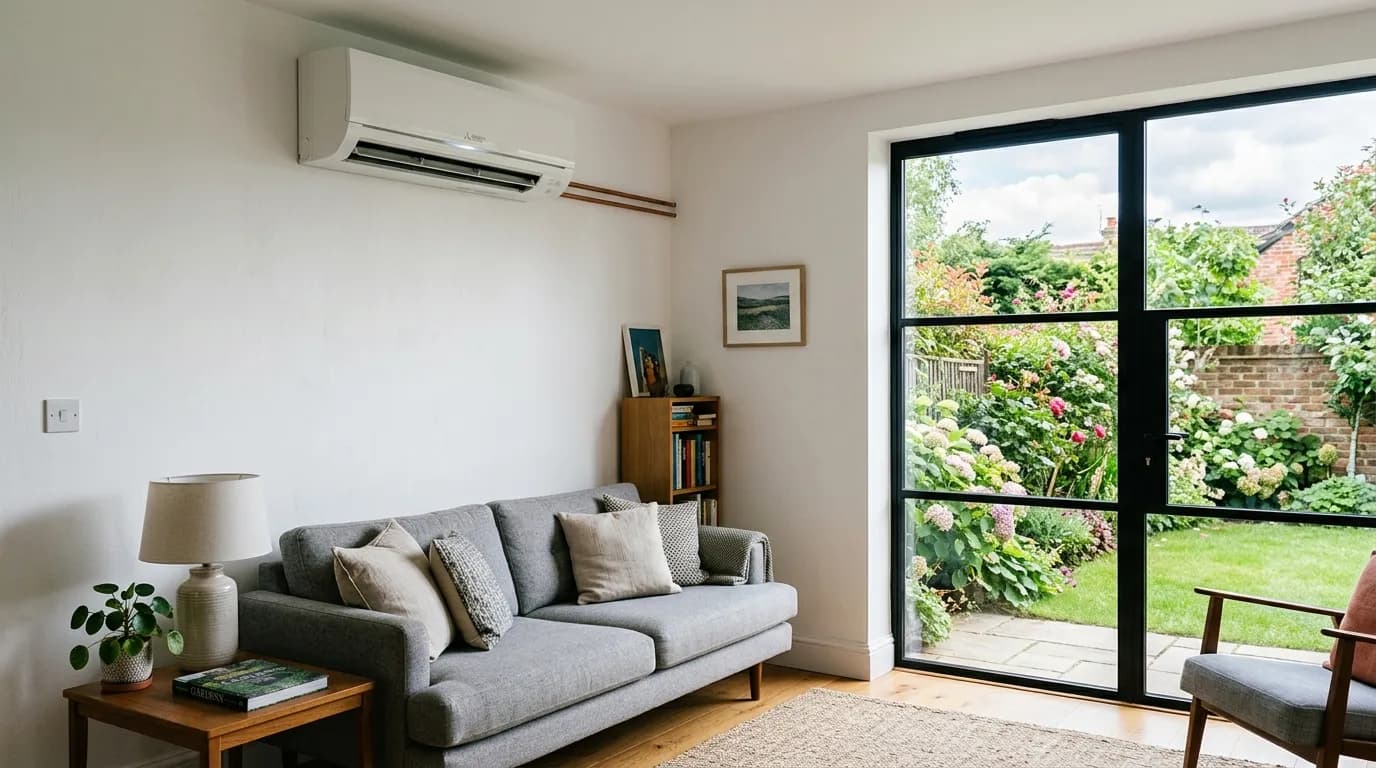
Split system air conditioning is the most popular type for UK homes, a wall-mounted indoor unit paired with an outdoor condenser. A single-room unit costs £1,500 to £2,500 fitted. A multi-split covering two rooms starts at £3,000, rising to £12,000 for a whole-house system. They cool in summer and heat in winter, making them one of the most versatile home improvements you can make.
£1,500
Single split from
£3,000
Multi-split from
£50 to £150
Running cost/year
1 day
Typical install
Prices updated April 2026 · Based on industry data and contractor submissions.
F-Gas certification required. Split system air conditioning must be installed by an F-Gas certified engineer, handling refrigerant without certification is a criminal offence. Check your installer's credentials on the gov.uk F-Gas register before work begins.
Split System Air Conditioning Cost by Type
All prices include the indoor unit, outdoor condenser, installation, and standard pipework up to three metres.
Single split (one room, 2.5kW)
Standard bedroom or small living room, supply and fit
£2,000
£1,500 to £2,500
Single split (one room, 3.5kW)
Larger living room or open-plan space, supply and fit
£2,400
£1,800 to £3,000
Multi-split (2 rooms)
One outdoor unit serving two indoor units
£4,000
£3,000 to £5,000
Multi-split (3 rooms)
One outdoor unit serving three indoor units
£5,750
£4,500 to £7,000
Whole house (4 to 5 rooms)
Multi-split covering most of the home
£9,500
£7,000 to £12,000
How Does a Split System Work?
A split system gets its name from the fact that the two main components are split between inside and outside the building. The indoor unit, a slim wall-mounted panel, is fitted high on the wall inside the room. The outdoor unit, which contains the compressor and condenser coil, sits outside on a wall bracket or ground stand. The two are connected by refrigerant lines and an electrical cable that pass through a small core-drilled hole in the external wall.
In cooling mode, the indoor unit absorbs heat from the room air and transfers it to the outdoor unit, which expels it outside. In heating mode, which is where they really shine for UK homeowners, the process reverses. Heat energy is extracted from the outside air (even when it feels cold) and pumped into the room. This is why split systems are classed as air-to-air heat pumps, not just air conditioners.
Because no ductwork is needed, installation is relatively clean and quick, most single-split installs are completed in a day. Multi-split systems with three or more indoor units typically take two days.
Single Split vs Multi-Split: Which Is Right for You?
| Factor | Single Split | Multi-Split |
|---|---|---|
| Rooms covered | 1 | 2 to 5 |
| Typical installed cost | £1,500 to £3,000 | £3,000 to £12,000 |
| Outdoor units needed | One per room | One for all rooms |
| Best for | One priority room | Multiple rooms or whole house |
| Can add rooms later? | Only with new outdoor unit | Yes, up to system capacity |
| Installation disruption | Low (1 day) | Moderate (1 to 2 days) |
If you only want to cool or heat one room, say a bedroom that gets unbearably hot in summer, a single split is the straightforward choice. If you want to cover two or more rooms, a multi-split nearly always works out cheaper than separate single splits because you only need one outdoor condenser. The outdoor unit also takes up less space and looks neater. The trade-off is a higher upfront cost and slightly more complex installation.
Running Costs: What Will It Add to My Bills?
One of the best things about split systems in the UK is that you'll probably use them far less than people do in warmer countries. Most UK homeowners run their air conditioning for cooling on perhaps 10 to 20 days a year during proper hot spells, so annual running costs for cooling are genuinely modest.
| Usage | Estimated Annual Cost |
|---|---|
| Cooling only (occasional summer use) | £50 to £80/year |
| Cooling (regular summer use, 2 to 3 months) | £80 to £150/year |
| Heating supplement (spring and autumn) | £100 to £200/year |
| Year-round cooling and heating | £200 to £400/year |
The key number to understand is the COP (Coefficient of Performance) or SCOP (Seasonal COP). A system with a SCOP of 4.0 produces 4kW of heat for every 1kW of electricity it uses. By comparison, a gas boiler is around 85 to 92% efficient, and an electric radiator is 100% efficient (1kW in = 1kW of heat). At a SCOP of 4.0, your split system is 400% efficient, and on mild days it can be even higher.
These figures are based on an electricity rate of around 24p per kWh (the 2026 price cap rate). If electricity prices fall or gas prices rise, the economics improve further.
Best Split System Brands for UK Homes
These are the brands you will encounter most often from UK installers, all with strong F-Gas certified installer networks.
| Brand | Notes |
|---|---|
| Mitsubishi Electric | Most popular in UK homes. Quiet, reliable, excellent cold-climate heating mode. |
| Daikin | Japanese quality, very energy efficient, long warranties, widely serviced. |
| Samsung | Good value, modern designs, WindFree panels minimise draughts. |
| Fujitsu | Strong performance in heating mode, competitive pricing. |
| LG | Art Cool panel options, good efficiency ratings, competitive on price. |
Planning Permission and Regulations
Most domestic split system installations are covered by permitted development rights and do not need planning permission. However, there are some situations where you will need to check first:
Listed buildings
You will almost certainly need listed building consent before installing an outdoor condenser unit. Even a small hole through an external wall counts as an alteration that requires approval.
Conservation areas
Outdoor units on a wall or roof that faces a highway are not permitted development in conservation areas. You may need to apply for planning permission, or position the unit out of sight.
Leasehold flats
Your lease may prohibit external alterations or require freeholder consent. Check your lease before booking an installer.
Noise regulations
The outdoor unit must not cause a statutory nuisance. There are no specific dB limits for domestic installations, but placing a condenser next to a neighbour's bedroom window is asking for problems. A professional installer will choose a sensible position.
If you are unsure whether you need permission, the Planning Portal's interactive guide is a good starting point, or you can submit a pre-application enquiry to your local planning authority.
Can a Split System Replace Your Heating?
This is the question more and more UK homeowners are asking as energy bills have risen sharply. The short answer is: yes, for heating individual rooms, but not as a whole-house replacement for central heating.
Split systems heat the air directly. They cannot heat water to run through radiators or underfloor heating. If you want a heat pump that works with your existing wet heating system, you need an air-to-water heat pump, a different and more expensive type of system.
That said, using a split system to heat the rooms you use most, and turning down the central heating elsewhere, can make a meaningful dent in your gas bill. The maths depend on your current energy tariffs, but at a SCOP of 3.5 and with electricity at 24p/kWh, the cost per kWh of heat from a split system is around 6.9p, compared to roughly 7.5p from a 90% efficient gas boiler at the current gas price cap rate.
The Energy Saving Trust recommends heat pump technology as one of the most cost-effective ways to heat a home with electricity, and a split system is the simplest and lowest-cost way to get started.
How to Get Your Split System for Less
Split system installation is a competitive market, and there is real money to be saved if you shop around and time things right. The Energy Saving Trust has useful guidance on heat pump technology if you want to understand the efficiency numbers in more depth.
Get at least three quotes
Split system installation prices can vary by 30 to 40% between contractors for the same job. Always get at least three written quotes from F-Gas certified installers. Make sure each quote specifies the brand, model, kW output, and what is included, some quotes omit extras like pipe trunking or electrical supply work. Comparing like-for-like is the single biggest way to save money.
Book in autumn or winter for the best price
The summer heatwave season is the worst time to shop for air conditioning, installers are stretched, prices creep up, and lead times can stretch to several weeks. Book your installation between October and February and you will typically save £100 to £300, get a faster turnaround, and have the system ready and tested well before the weather turns.
Choose the right size unit, not the biggest
Oversizing is a common mistake. A unit that is too powerful for the room will short-cycle, cooling too quickly, switching off, then restarting repeatedly. This wastes energy and wears out the compressor faster. A properly sized unit runs longer at lower power, which is more efficient and quieter. Ask your installer to show you the cooling load calculation, not just quote a unit size based on guesswork.
Use the heating mode to cut your winter energy bills
Your split system is a heat pump. In heating mode it is 300 to 400% efficient, every unit of electricity produces three or four units of heat. On a mild day (above 5°C) it is likely cheaper to run than your gas boiler per kWh of heat delivered. Using it to heat frequently occupied rooms while turning down the central heating elsewhere can noticeably trim your bills from October to April.
See if the £2,500 Boiler Upgrade Scheme grant applies to you
Because a split system heats as well as cools, it counts as an air-to-air heat pump, and since April 2026 that qualifies for a £2,500 grant under the Boiler Upgrade Scheme in England and Wales. The system has to replace your existing heating rather than add to it, and the installer must be MCS certified, not just F-Gas registered. Be aware that few air-to-air products had actually been certified for the scheme by mid-2026, so confirm it is available on your unit before relying on it.
Useful Resources
What to Expect: The Split System Installation Process
A single-split installation is typically completed in a day. Here's what the process looks like from survey to handover.
- 1
Site survey and cooling load calculation
An F-Gas certified installer surveys each room, calculates the cooling (and heating) load based on room size, insulation, window area, and orientation, and recommends the correct unit size. Oversizing wastes energy; undersizing means the system cannot cope on hot days.
- 2
Choose unit positions
The indoor unit position is selected, typically high on an internal wall for optimal airflow. The outdoor condenser position is chosen for good ventilation, minimal noise impact on neighbours, and a short pipe run to the indoor unit (under 3 metres is ideal).
- 3
Core drill through the wall
A 65mm to 70mm hole is drilled through the external wall to connect the indoor and outdoor units. The hole is angled slightly downward to the outside for condensate drainage. This is one of the most disruptive parts of the installation, dust sheets and a vacuum are used to manage mess.
- 4
Mount the indoor and outdoor units
The indoor unit is fixed to a mounting plate on the wall. The outdoor condenser is placed on a wall bracket or ground stand with anti-vibration mounts. Refrigerant lines, a condensate drain, and an electrical cable are run through the core-drilled hole and connected.
- 5
Vacuum, charge, and commission
The refrigerant lines are vacuum-tested to remove moisture and air. The system is charged with the correct amount of R32 refrigerant (the standard for modern domestic units). The installer commissions the system and checks cooling and heating performance.
- 6
Handover and F-Gas paperwork
The installer demonstrates the remote control and any app-based controls. F-Gas documentation is completed recording the refrigerant type and charge weight, this is a legal requirement. You receive the warranty details and recommended annual service schedule.
Frequently Asked Questions
How much does a split system air conditioner cost in the UK?
A single split system (one room, 2.5kW) costs £1,500 to £2,500 fully installed. A 3.5kW single split for a larger room costs £1,800 to £3,000. Multi-split systems start at £3,000 to £5,000 for two rooms and rise to £7,000 to £12,000 for a whole house with four or five rooms. Prices include the unit, outdoor condenser, installation, and standard pipework.
What is the difference between a single split and a multi-split system?
A single split system has one outdoor unit connected to one indoor unit, serving a single room. A multi-split system has one outdoor unit connected to multiple indoor units in different rooms. Multi-split is more cost-effective than installing separate single splits for each room because you only need one outdoor condenser, saving on equipment and installation time.
How much does it cost to run a split system air conditioner?
A typical 2.5kW split system costs around £50 to £80 per year to run for cooling in the UK, assuming normal usage during hot spells. Because British summers are relatively mild, air conditioning is used far less than in warmer countries. In heating mode, a split system operates as an air-to-air heat pump and is highly efficient, producing around 3 to 4kW of heat for every 1kW of electricity used.
Do I need planning permission for a split system air conditioner?
Most domestic split system installations fall under permitted development and do not require planning permission. However, if you live in a listed building, conservation area, or some leasehold flats, you may need consent from your local planning authority or freeholder. The outdoor unit must also comply with noise regulations, a good installer will position it to avoid disturbing neighbours.
Can a split system replace my gas boiler?
A split system air conditioner acts as an air-to-air heat pump, which means it can both cool in summer and heat in winter. It is 300 to 400% efficient at heating, making it cheaper to run than electric radiators and comparable to or cheaper than gas for many homes. However, it heats the air rather than water, so it cannot run radiators or underfloor heating, for that you would need an air-to-water heat pump.
Which brand of split system air conditioner is best for UK homes?
Mitsubishi Electric is the most widely installed brand in UK homes, known for quiet operation and reliability. Daikin is another top choice, particularly popular for its energy efficiency and long warranties. Samsung, Fujitsu, and LG also make excellent units with strong UK availability and F-Gas certified installer networks. Whichever brand you choose, look for a model with an A++ or A+++ energy rating and an inverter compressor.

Written by Chris Kervin, Co-Founder, Less.co.uk
Last updated: April 2026 · Pricing based on industry data and verified contractor submissions · Methodology
Ready to keep cool, and warm, for less?
A split system does both. Get quotes sorted before the next heatwave, or the next heating bill.
Get Free QuotesFree, no obligation · F-Gas certified · Compare up to 3 quotes
Compare real quotes for your job
Prices move a lot with your postcode, the access on site and the spec you choose. Get up to 3 free quotes from vetted local tradespeople and see what yours actually comes to, with no obligation to book.