How Much Does Air Conditioning Cost in 2026?
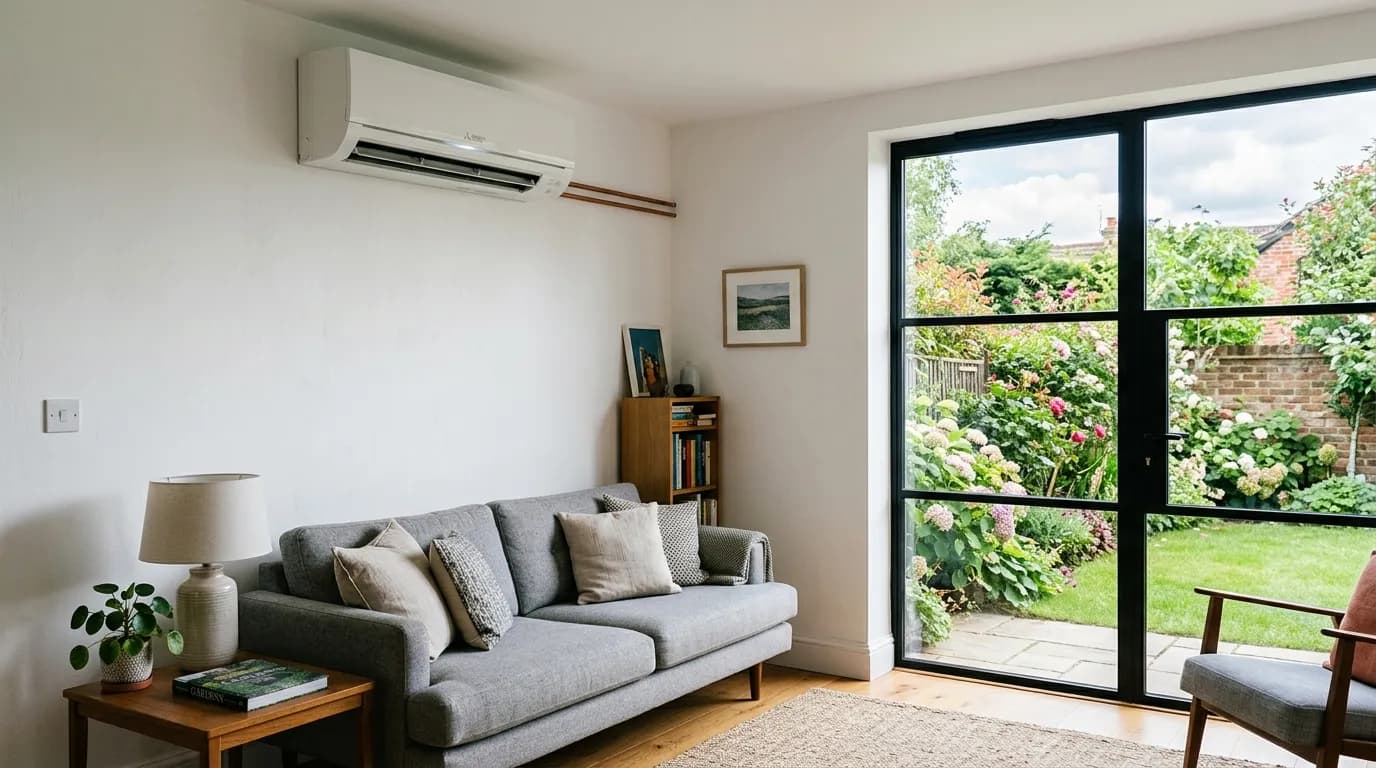
A single-room air conditioning unit costs about £2,200 fitted in November 2026, and most single wall-mounted units cost £1,500 to £3,000 depending on size. A multi-split system for two to four rooms costs £3,000 to £6,000, and ducted whole-house air conditioning £5,000 to £15,000.
£1,500
Single unit from
£3,000
Multi-split from
9 to 16p/hr
Running cost
1 day
Typical install
Last updated . Prices are compiled from published trade rate cards, supplier and manufacturer prices, and official fees. How we work out our prices.
To cite this page: Less.co.uk, “Air Conditioning Cost UK 2026”, updated 13 November 2026, https://less.co.uk/home-improvements/air-conditioning/cost. You're welcome to quote these figures with a link to this page.
F-Gas certification required. Air conditioning installation must be carried out by an F-Gas certified engineer. Handling refrigerant without certification is a criminal offence. Check your installer's credentials on the gov.uk F-Gas register before work begins.
How Much Is Air Conditioning? Installation Cost by System
Prices include the unit, installation by an F-Gas certified engineer, and standard pipework.
Single wall-mounted unit (2.5kW)
One room, supply and fit, standard installation
£2,000
£1,500 to £2,500
Single wall-mounted unit (3.5kW)
One larger room, supply and fit
£2,300
£1,800 to £2,800
Multi-split (2 rooms)
One outdoor unit serving two indoor units
£3,800
£3,300 to £4,800
Multi-split (3-4 rooms)
One outdoor unit serving three or four rooms
£5,000
£4,000 to £6,000
Ducted system (whole house)
Concealed units, ductwork through ceiling voids
£10,000
£5,000 to £15,000
Portable unit (no installation)
Freestanding, vents through window hose
£400
£250 to £600
Few installers publish air conditioning prices, so these figures rest on thin evidence: the prices four firms publish for a single split and three for multi-splits (checked November 2026), cross-checked against published cost guides. One of those firms leaves the electrics out, and they add £300 to £800. There's no official or regional data on air conditioning prices. We also used the F-Gas rules on gov.uk and Energy Saving Trust guidance on air-to-air heat pumps. How we compile our prices.
Get Free Air Conditioning Quotes
Tell us about the job and local air conditioning installers will get in touch with prices. Free, with no obligation to book. Check your installer is F-Gas certified before you agree to anything.
Your details go to our quote partner, Leads.work, who pass them to a few local firms that cover your area. They'll contact you about the job, which may include a phone call. It's free for you, and we're paid a referral fee. How your details are used
Air Conditioning Running Costs
What does it cost to run air conditioning? These figures use the October 2026 price cap rate for electricity, 26.32p per kWh. There is no VAT on electricity until 31 March 2027.
| Unit | Per Hour | 8 Hours | Per Month |
|---|---|---|---|
| 2.5kW wall unit | 9 to 11p/hr | 72 to 88p | £22 to £26 |
| 3.5kW wall unit | 11 to 15p/hr | 88p to £1.20 | £26 to £36 |
| 5kW wall unit | 15 to 22p/hr | £1.20 to £1.76 | £36 to £53 |
| Portable unit (2.5kW) | 22 to 33p/hr | £1.76 to £2.64 | £53 to £79 |
Monthly costs assume 8 hours daily use during warm months. Actual costs depend on room insulation, outdoor temperature, and thermostat setting.
Additional Costs
| Item | Typical Cost |
|---|---|
| Outdoor unit bracket | £50 to £150 |
| Extended pipe run (per metre) | £20 to £40 |
| Electrical supply upgrade | £300 to £800 |
| Core drilling (per hole) | £50 to £100 |
| Annual service | £80 to £150 |
| Trunking / pipe concealment | £100 to £300 |
Air Conditioning Costs by Region
There's no official regional data for air conditioning prices, so these scale our UK average for a single wall-mounted unit, supply and fit, by local building costs. A unit used only for cooling isn't covered by permitted development, so you may need planning permission for the outdoor unit, especially in a conservation area or at a listed building.
- Dearest
- £2,550London, 17% above the UK average
- Cheapest
- £1,950the North East and Yorkshire, 11% below the UK average
- The gap
- £600more in London than in the North East and Yorkshire. The South East is next dearest, at £2,350.
| Region | Average Cost | vs National |
|---|---|---|
| London | £2,550 | +17% |
| South East | £2,350 | +7% |
| East of England | £2,300 | +5% |
| North West | £2,250 | +2% |
| Scotland | £2,200 | UK average |
| Midlands | £2,200 | -1% |
| South West | £2,150 | -3% |
| Wales | £2,050 | -7% |
| North East | £1,950 | -11% |
| Yorkshire | £1,950 | -11% |
Regional prices use the BCIS location factors published by the Department for Education (December 2025), with the Valuation Office Agency's figure for Wales. There's no current official figure for Scotland, so we show the UK price there. How we work out regional prices.
How to Get Your Air Conditioning for Less
Air conditioning is becoming more common in UK homes, especially with hotter summers. The Energy Saving Trust recommends heat pumps as one of the most efficient forms of electric heating and cooling. Here is how to keep the cost down.
Get at least three quotes
Get at least three quotes and compare them line by line. Prices for the same job often vary by 20 to 40% between firms.
Install in autumn or winter when demand is lowest
Air conditioning installers are busiest every summer when the heatwaves hit, and lead times can stretch to weeks. Booking in autumn or winter usually gets you a quicker install, and the system is ready before the next hot spell arrives.
Choose an inverter unit over a fixed-speed model
Inverter units adjust their speed to match the cooling load rather than cycling on and off. They are 30 to 50% cheaper to run, much quieter, and maintain a more consistent temperature. The upfront cost is slightly higher but the running cost savings pay for the difference within a couple of years.
Do not oversize the unit
A unit that is too powerful for the room wastes energy and money. It cools the air too fast, shuts off, then starts again. This short-cycling increases wear and running costs. A good installer will calculate the exact cooling load based on room size, insulation, glazing, and orientation.
Use the heating mode in winter to save on gas bills
Air-to-air heat pumps produce 3 to 4kW of heat per 1kW of electricity. At current energy prices, this makes them cheaper than gas central heating per kWh of heat delivered. Using your air conditioning for supplementary heating in spring and autumn can noticeably reduce your gas bill.
Check if you qualify for the £2,500 heat pump grant
A split system running in heating mode is an air-to-air heat pump, and since 28 April 2026 that technology qualifies for a £2,500 grant under the Boiler Upgrade Scheme in England and Wales. To be eligible the heat pump has to replace your existing heating rather than run alongside it, and the work must be carried out by an MCS certified installer rather than a standard F-Gas fitter. One catch worth knowing: very few air-to-air products had been certified for the scheme by mid-2026, and government figures show no air-to-air grants had been paid by the end of September 2026, so check the grant is actually claimable on your chosen system before you count on it.
Comparing quotes is the simplest way to pay less
Getting three or four quotes and comparing them is how most homeowners avoid overpaying. It takes a couple of minutes, with no obligation.
Get my free quotesWhat to Expect: The Installation Process
- 1
Survey and sizing
An F-Gas engineer visits to assess the room, calculate the cooling load, and recommend the right unit size and position. They check the external wall for pipe routing and find the best spot for the outdoor condenser unit.
- 2
Core drilling and pipe run
A hole is drilled through the external wall for the refrigerant pipes, condensate drain, and electrical cable. The outdoor unit is mounted on a wall bracket or ground stand. Pipes are connected and pressure-tested for leaks.
- 3
Indoor unit fitted
The indoor unit is mounted on the wall (usually high up near the ceiling for the best airflow). It connects to the pipe run from the outdoor unit. The condensate drain is routed to an external drain point.
- 4
Electrical connection and commissioning
The system is connected to the electrical supply, charged with refrigerant, and commissioned. The engineer runs it in both cooling and heating modes to check everything works properly. They programme the remote control and walk you through the settings.
- 5
Handover
The engineer cleans up, fills in the F-Gas log (a legal requirement recording the refrigerant type and charge), and provides the manufacturer warranty documentation. They should also explain filter cleaning and when to book the annual service.
Frequently Asked Questions
How much does air conditioning cost to install?
A single-room wall-mounted unit costs £1,500 to £3,000 fully installed, and about £2,200 is typical. A multi-split system serving 2 to 4 rooms costs £3,000 to £6,000. Few installers publish their prices, so treat these figures as a guide. A ducted whole-house system costs £5,000 to £15,000. The price depends on the system type, number of rooms, property size, and how easy it is to route pipes and cables.
How much is air conditioning for a whole house?
A ducted whole-house system costs £5,000 to £15,000, and a multi-split serving three or four rooms costs £4,000 to £6,000. Many people start with the rooms that overheat instead: about £2,200 for a single wall-mounted unit, or £3,300 to £4,800 for a two-room multi-split.
How much does air conditioning cost to run?
A typical wall-mounted air conditioning unit costs 9 to 22p per hour to run for cooling, depending on the unit size and your electricity tariff. Running it for 8 hours a day during a hot spell works out at roughly £22 to £53 per month. Modern inverter units are significantly cheaper to run than older fixed-speed models because they adjust output rather than cycling on and off.
Do I need planning permission for air conditioning?
It depends on what the unit does. A unit that also heats your home can count as an air source heat pump under permitted development, as long as it meets the size and siting limits and the MCS 020a noise standard. A unit used only for cooling isn't covered by those rules, so check with your council before you buy. If you live in a listed building, a conservation area or a flat, you may need approval either way. Your installer should place the outdoor unit where it disturbs neighbours least.
Can air conditioning also heat a room?
Yes. Most modern air conditioning units are heat pumps that work in reverse, so they cool in summer and heat in winter. They are very efficient at heating, typically producing 3 to 4kW of heat for every 1kW of electricity used. This makes them cheaper to run for heating than electric radiators and useful as supplementary heating alongside a gas boiler.
Who can install air conditioning?
Air conditioning must be installed by an F-Gas certified engineer. F-Gas certification means they are qualified to handle refrigerant gases safely and legally. It is a criminal offence to install, maintain, or dispose of air conditioning equipment without F-Gas certification. Always check your installer's credentials before work starts.
Free, with no obligation to book.
Written by Chris Kervin, Co-Founder, Less.co.uk
Last updated: · Pricing based on installers' published prices · Methodology