Oven Cleaning: Professional vs DIY Guide
A grimy oven wastes energy, smells bad, and can even be a fire risk. The Which? oven cleaning guide has useful tips on products and methods. Whether you scrub it yourself or call in a professional, this guide covers the best methods, what it costs, and when it is worth paying someone else to do it. Spoiler: the results from a professional clean are hard to beat.
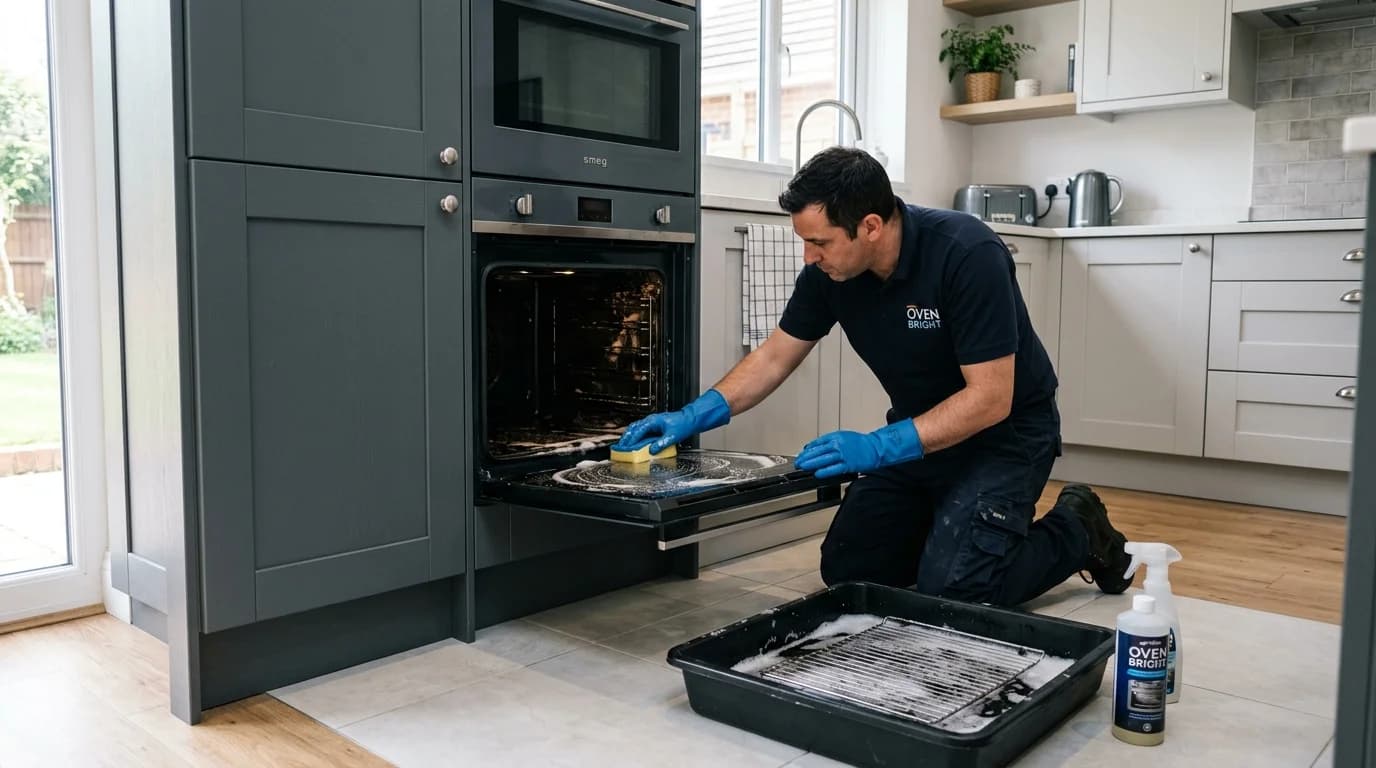
When to get a professional clean
Heavy grease and carbon build-up
If you can see thick black residue on the oven walls, floor, or around the heating element, DIY products will struggle. A professional dip tank removes carbon that has been baking on for months or years.
Before selling or renting a property
A clean oven makes a better impression on viewers and buyers. Estate agents say kitchens sell houses, and a sparkling oven is part of that. End of tenancy cleaning usually includes the oven.
Smoke or burning smells when cooking
If your oven smokes or smells when you turn it on, burnt-on grease is the likely cause. As well as being unpleasant, this grease can catch fire in extreme cases. A thorough clean solves the problem.
Oven not heating evenly
Grease build-up on the fan, element, or thermostat housing can affect heat distribution. A professional clean restores proper airflow and heating, which can also reduce your energy bills.
After years without cleaning
If the oven has not been properly cleaned in 2 or more years, a DIY clean is unlikely to shift everything. Start with a professional clean, then maintain it with regular DIY wipe-downs.
Self-cleaning function not working well
Pyrolytic and catalytic self-cleaning functions handle light soiling but struggle with heavy grease. If your oven's self-clean cycle is not getting it done, a professional clean is the next step.
How professional oven cleaning works
- 1
Disassembly
The cleaner removes shelves, racks, grill pans, the oven door (where possible), and the door glass. These are taken to a heated dip tank, a sealed unit usually kept in the cleaner's van.
- 2
Dip tank soak
Removable parts are submerged in a non-caustic, biodegradable solution heated to around 60-70 degrees. This dissolves grease and carbon without damaging the metal. Parts soak for 10 to 30 minutes depending on how dirty they are.
- 3
Interior cleaning
While parts soak, the cleaner scrubs the oven interior by hand using non-caustic paste and specialist scrapers. The heating elements, fan cover, and oven floor get particular attention. No harsh chemicals or fumes are used.
- 4
Reassembly and test
Everything is rinsed, dried, and reassembled. The cleaner runs the oven briefly to check it heats correctly and that no cleaning residue remains. You can cook in it straight away.
DIY oven cleaning methods
Bicarbonate of soda and vinegar
Make a paste with bicarbonate of soda and water, spread it on the oven interior, leave overnight, then wipe off and spray with white vinegar. Good for light to moderate grease. Free if you have the ingredients, and completely non-toxic.
Shop-bought oven cleaner
Products like Oven Pride and Mr Muscle work well on moderate grease. Follow the instructions carefully, ventilate the room, and wear gloves. Caustic sprays (the most effective) produce strong fumes, so open a window and keep children and pets away.
Steam cleaning
Place an oven-safe dish of water with lemon juice in the oven and heat to 120 degrees for 30 minutes. The steam loosens light grease, making it easier to wipe away. Works for maintenance cleans but will not tackle heavy build-up.
Self-cleaning function
Pyrolytic ovens heat to 500 degrees and burn off grease to ash, which you wipe out once cool. Catalytic liners absorb grease during normal cooking. Both work for light soiling but struggle with heavy build-up. The pyrolytic cycle uses a lot of energy and takes 2 to 3 hours.
Get at least three quotes
Oven cleaning prices can vary between companies even in the same area. Get at least three written quotes so you can compare like for like. Check whether the price covers hob cleaning, the extractor fan, and the microwave, or whether those are charged as extras. Also confirm the cleaner uses non-caustic, fume-free products - that is the standard you should expect from any reputable oven cleaning company.
Common questions
How often should I get my oven professionally cleaned?
Every 6 to 12 months for a regularly used oven. If you cook daily or roast frequently, every 6 months keeps grease and carbon build-up under control. If you rarely use the oven, once a year is usually enough. A heavily soiled oven uses more energy because burnt-on grease insulates the heating elements, so regular cleaning can reduce your energy bills.
Is professional oven cleaning worth it?
If your oven has significant grease and carbon build-up, professional cleaning is worth the £50 to £70 it costs. They use non-caustic dip tanks and specialist tools that get results DIY products cannot match. The oven heats up more efficiently, smells better, and looks almost new. For a light clean on a fairly new oven, DIY products are fine.
How long does professional oven cleaning take?
A single oven takes about 1 to 1.5 hours. A double oven takes 1.5 to 2 hours. Range cookers like Agas and Rayburns take 2 to 3 hours. The cleaner removes shelves, racks, and the door glass, soaks them in a non-caustic solution in their van, and cleans the interior by hand. You can use the oven straight away afterwards.
Are the chemicals used safe?
Reputable professional oven cleaners use non-caustic, fume-free solutions that are safe around children, pets, and food preparation surfaces. This is one of the main advantages over shop-bought oven cleaners, which are typically caustic and produce strong fumes. Always check that the company uses non-caustic products before booking.
Oven seen better days?
See what a professional clean costs and whether it is worth it for your oven.
See 2026 prices