How Much Does a Hot Tub Cost to Run in 2026?
Electricity alone costs £30 to £60 per month for a well-insulated tub. But that is only part of it, chemicals, water, servicing, and occasional repairs add up too. The honest annual total is £600 to £1,200 a year. Here is exactly where that money goes, and how to spend less of it.
£30 to £60
Electricity (monthly)
£200 to £400
Chemicals (annual)
£50 to £100
Water (annual)
£600 to £1,200
Total annual cost
Costs updated April 2026 · Based on industry data and UK energy pricing.
Hot Tub Electricity Costs
Electricity is the biggest ongoing expense. The Energy Saving Trust puts the average UK unit rate at around 25p per kWh. A typical hot tub uses 3,000 to 5,000 kWh per year, though realistic usage with a good cover and standby mode sits closer to 1,500 to 2,800 kWh for most households.
| Scenario | Monthly | Annual |
|---|---|---|
| Inflatable hot tub (year-round use) | £40 to £80 | £480 to £960 |
| Acrylic tub, well insulated (regular use) | £30 to £60 | £360 to £720 |
| Acrylic tub, average insulation | £45 to £75 | £540 to £900 |
| Swim spa (larger volume) | £70 to £130 | £840 to £1,560 |
Standby vs heating from cold
Heating a hot tub from cold takes 12 to 24 hours and uses a significant chunk of electricity. If you use your tub more than once or twice a week, keeping it in standby mode at temperature is almost always cheaper than letting it go cold between uses.
If you only use it occasionally, consider an economy or holiday mode, typically set to 20°C, rather than switching it off entirely. A completely empty, cold tub is harder on the pumps and makes water chemistry more difficult to balance when you refill.
What affects electricity costs most?
- Insulation qualityThe biggest variable. A well-insulated cabinet and cover can halve electricity costs compared to a basic inflatable.
- Cover qualityA worn, waterlogged cover insulates poorly. Replacing it is the single best investment for reducing running costs.
- Ambient temperatureRunning costs are higher in winter. A tub in an exposed garden costs noticeably more than one in a sheltered spot.
- Usage frequencyMore frequent use means less re-heating from sub-temperature. Three to four short sessions a week is more efficient than one long weekend session.
- Set temperatureEach degree lower saves around 5% on heating costs. At 38°C rather than 40°C you will not notice the difference on a warm day.
Hot Tub Chemical Costs
Keeping the water safe and clear requires a routine of sanitising, balancing, and occasional shocking. Budget £200 to £400 per year once you add everything up, though buying in bulk and testing accurately (rather than guessing) brings that figure towards the lower end.
| Item | Annual Cost |
|---|---|
| Chlorine or bromine tablets | £100 to £200 |
| pH adjusters (increaser & reducer) | £20 to £40 |
| Anti-foam | £10 to £20 |
| Water clarifier | £15 to £30 |
| Filter cartridges (replacement) | £30 to £60 |
| Shock treatment (oxidiser) | £20 to £40 |
Water Costs
Water is the cheapest part of hot tub ownership, but it still adds up over a year. A standard hot tub holds 1,000 to 1,500 litres, about £3 to £5 to fill at typical metered rates. You should drain and refill every three to four months to keep the water chemistry manageable.
Initial fill (1,000 to 1,500 litres)
Mains water at typical metered rate
£3 to £5
Quarterly drain and refill (×3 per year)
Every 3 to 4 months as recommended
£9 to £15
Top-ups between changes
Evaporation and splashing; estimate 50 to 100 litres/month
£10 to £20
Total annual water cost
Includes watering garden or draining to sewer
£50 to £100
If you have a garden, draining the tub into the lawn or borders (when chemical levels are safe) is a good way to use the water. Never drain heavily chlorinated or brominated water directly into a watercourse or drain without diluting or neutralising it first.
Maintenance & Repair Costs
A well-maintained hot tub should need little in the way of repairs, but it is worth budgeting for an annual service and the occasional replacement part. An annual service typically costs £100 to £200 and includes a pump and heater check, jet clean, and water test.
| Item | Typical Cost |
|---|---|
| Annual service | £100 to £200 |
| Cover replacement | £200 to £500 |
| Filter housing clean | DIY or £30 to £60 |
| Pump repair or replacement | £150 to £400 |
| Heater element replacement | £100 to £300 |
| Jets or pipework repair | £80 to £200 |
Inflatable vs Hard-Shell: Running Cost Difference
One of the most common mistakes first-time buyers make is choosing an inflatable hot tub to save money upfront, without factoring in how much more they cost to run.
Inflatable hot tub
- -£40 to £80/month electricity (worse insulation)
- -Bubble jets rather than true hydrotherapy jets
- -Higher chemical use (harder to maintain balance)
- -2 to 5 year lifespan before liner degrades
- +£300 to £700 purchase price
- +No installation or electrical work needed
Hard-shell acrylic tub
- +£30 to £60/month electricity (good insulation)
- +True hydrotherapy jets and better heating
- +Easier water chemistry management
- +15 to 20 year lifespan with proper maintenance
- -£5,000 to £12,000 purchase price
- -Electrical installation required (£350 to £800)
If you use your hot tub three or more times a week year-round, the energy saving of an acrylic tub versus an inflatable can add up to £250 to £500 per year. Over a five-year period, the running cost advantage often more than closes the gap in purchase price, especially when you factor in the inflatable needing replacement after a few years.
How to Get Your Hot Tub Running for Less
Invest in a quality cover
The insulated cover is the most important piece of kit for keeping running costs down. A hot tub without its cover on loses heat through evaporation four to five times faster than through the walls. When the cover starts to feel heavy or waterlogged, a sign the foam core is soaking up water and losing its insulating properties, replace it. A decent replacement cover costs £200 to £500 but pays for itself in electricity savings within a year or two.
Add a thermal float blanket
A floating thermal blanket sits directly on the water surface underneath your main cover and adds another layer of insulation. They cost £20 to £50 and make a noticeable difference, particularly overnight and in winter. It is one of the cheapest running cost improvements you can make.
Use off-peak electricity
If you are on an economy tariff with cheaper overnight rates, programme your tub's filtration and heating cycles to run during off-peak hours, typically between 10pm and 8am. Some smart tariffs offer rates as low as 7p to 10p per kWh overnight versus 25p or more during the day. Check with the Energy Saving Trust or Ofgem for current tariff comparisons.
Drop the temperature by 2°C
Lowering your set temperature from 40°C to 38°C can cut electricity use by around 10 to 15%. Most people genuinely cannot tell the difference during a soak, especially in summer. In winter you may want it warmer, but dialling it back during milder months is a straightforward free saving.
Build a windbreak around the tub
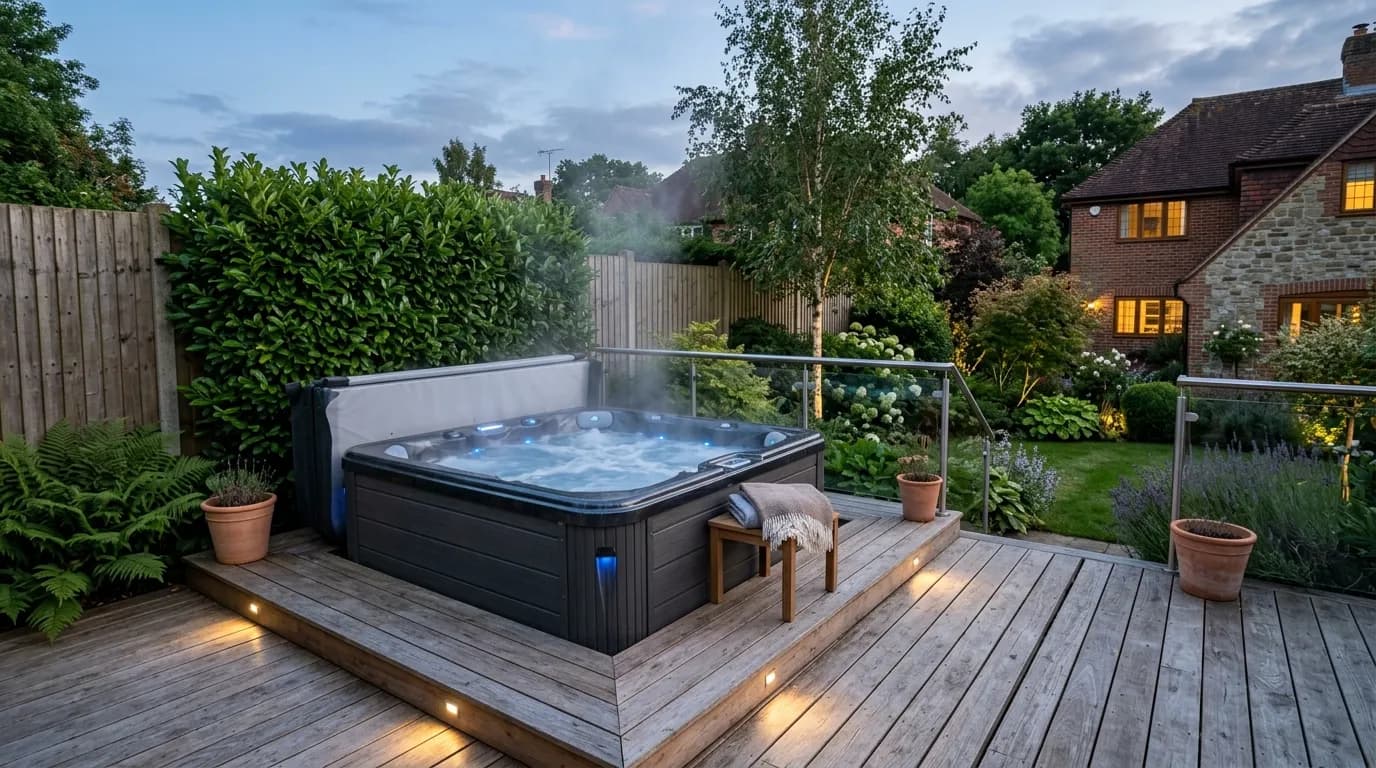
Wind dramatically increases heat loss from a hot tub, even with the cover on. A fence, pergola, or garden wall on the windward side can make a real difference, particularly in exposed gardens. As a bonus, it gives you more privacy and makes the whole area feel more like a proper outdoor spa. Get 3 quotes from local fencing or landscaping contractors to keep the cost sensible.
Getting a hot tub installed? Always get at least 3 quotes from local suppliers. There is often a significant difference between the highest and lowest quote for the same tub and installation spec, and the cheapest quote is not always the worst. Compare what is included: base preparation, electrical work, first chemical kit, and a handover session all add value.
Useful Resources
Frequently Asked Questions
How much does a hot tub cost to run per month?
A well-insulated acrylic hot tub typically costs £30 to £60 per month in electricity, assuming you use it three or four times a week and keep it in standby mode rather than heating from cold each time. Add £15 to £35 per month for chemicals and you are looking at roughly £45 to £95 per month in total ongoing costs. Inflatable hot tubs cost more to run, often £40 to £80 per month in electricity alone, because their thin walls lose heat much faster.
How much electricity does a hot tub use per year?
A typical hot tub uses between 3,000 and 5,000 kWh per year. At the current average UK unit rate of around 25p per kWh, that works out to £750 to £1,250 per year at maximum. In practice, most households use their hot tub less intensively than that figure assumes, and a good insulated cover dramatically reduces heat loss. Realistic annual electricity costs for a well-maintained acrylic tub are £400 to £700 per year.
Is it cheaper to keep a hot tub heated all the time or heat it on demand?
For most people who use their hot tub more than once or twice a week, keeping it at temperature is cheaper than heating from cold. Heating a hot tub from cold takes 12 to 24 hours and uses a significant amount of electricity. If you only use it once a fortnight, heating on demand may work out cheaper, but set it to an eco or economy mode in between rather than switching it off completely, as completely cold water also stresses the pumps and makes chemical balancing harder.
How much do hot tub chemicals cost per year?
Budget £200 to £400 per year for hot tub chemicals. That covers chlorine or bromine tablets (£100 to £200), pH adjusters, anti-foam, and water clarifier (£50 to £100), and replacement filters every three to six months (£30 to £60). Buying chemicals in bulk and testing the water regularly, rather than guessing and overdosing, is the easiest way to keep chemical costs down.
Do inflatable hot tubs cost more to run than hard-shell tubs?
Yes, significantly. Inflatable hot tubs have thin walls with minimal insulation, so they lose heat rapidly, especially in colder months. Electricity costs for an inflatable can be £40 to £80 per month compared to £30 to £60 for a well-insulated acrylic tub. In winter, the gap widens further. If you plan to use a hot tub regularly throughout the year, the long-term running cost savings of a hard-shell tub can offset the higher purchase price within a few years.
How can I reduce my hot tub running costs?
The single biggest saving is a high-quality insulated cover, kept on whenever the tub is not in use. Other effective measures include adding a thermal float blanket inside the cover, building a windbreak or fence around the tub, lowering the set temperature by 2°C, using a timer to run the filtration cycle during off-peak electricity hours, and insulating the cabinet sides. Together these measures can cut electricity costs by 20 to 40% compared to a poorly managed setup.

Reviewed by Chris Kervin, Less.co.uk founder
Last updated: April 2026 · Based on UK energy pricing and industry data · Methodology
Want the full picture?
Running costs are just one side of the equation. See our complete hot tub cost guide, purchase prices, installation, regional breakdowns, and how to buy smart.
See Hot Tub Purchase PricesInflatable, plug-and-play, and premium acrylic hot tubs compared