Combi vs System Boiler: Which Is Right for You?
Combi, system or heat-only? The right boiler depends on your home size, how many bathrooms you have, and how much hot water you use. This guide breaks down the differences so you can make the right call.
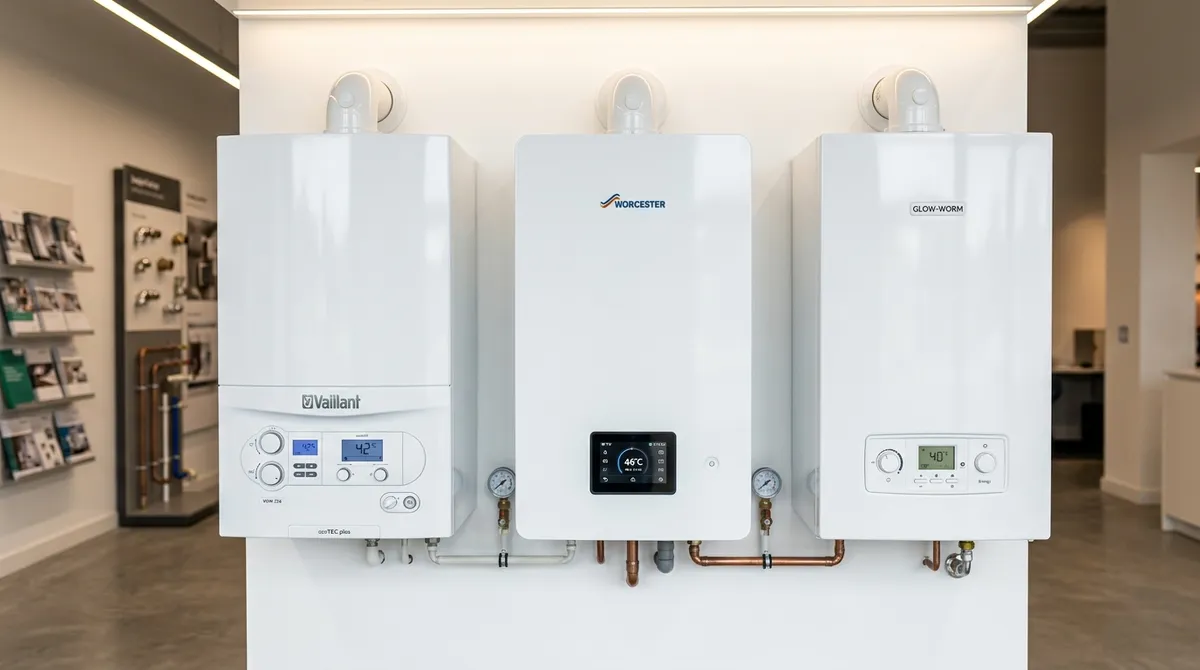
All boiler installations must be carried out by a Gas Safe registered engineer. This is a legal requirement, not a recommendation. Check your engineer's credentials at gassaferegister.co.uk before any work starts.
Quick answer
Combi or system? Here is the short version
1 bathroom? Get a combi boiler. It heats water on demand, takes up less space, and costs less to install. Most UK homes with one bathroom are best served by a combi.
2 or more bathrooms? Go with a system boiler. It stores hot water in a cylinder, so you can run two showers at the same time without losing pressure. It costs more upfront but handles higher demand far better.
Typical costs: A combi boiler runs £1,800 to £2,800 installed. A system boiler costs £2,200 to £3,500 installed, plus the cylinder if you do not already have one.
Combi vs system boiler at a glance
| Combi boiler | System boiler | |
|---|---|---|
| How it works | Heats water directly from the mains when you turn on a tap | Heats water and stores it in a hot water cylinder |
| Best for | 1-3 bed homes, 1 bathroom | 3+ bed homes, 2+ bathrooms |
| Hot water supply | Unlimited, but one outlet at a time | Multiple outlets simultaneously, limited by cylinder size |
| Installation cost | £1,800 - £2,800 | £2,200 - £3,500 (plus cylinder) |
| Space needed | Wall-mounted, no cylinder required | Boiler plus hot water cylinder (airing cupboard) |
| Water pressure | Depends on mains pressure | Consistent, works with power showers |
| Power showers | Not compatible | Fully compatible |
| Running cost (typical) | Slightly lower for small households | Slightly higher due to cylinder heat loss |
| UK market share | 70%+ of new installations | Around 15-20% of new installations |
| Top brands | Worcester Bosch, Vaillant, Viessmann, Ideal, Baxi | Worcester Bosch, Vaillant, Viessmann, Ideal, Baxi |
Combi boilers explained
A combi (combination) boiler does central heating and hot water from a single unit. No cylinder, no tank. Turn on a tap and it heats water directly from the mains. Over 70% of new boiler installations in the UK are combis, and for most homes with one bathroom, they are the obvious choice.
Pros
- Compact and wall-mounted, freeing up cupboard space where a cylinder would normally sit
- Instant hot water with no waiting for a cylinder to heat up
- Lower installation cost than system boilers, typically £400 to £700 cheaper
- No risk of cylinder leaks or frozen loft tanks
- More energy efficient for smaller homes because you only heat the water you actually use
Cons
- Struggles with simultaneous demand. Running two showers at once will drop the water temperature noticeably
- Not compatible with power showers, which need a stored water supply to function
- Water pressure depends entirely on your mains supply. If your mains pressure is poor, your shower will be poor
- Flow rate is limited to around 10-15 litres per minute, which is fine for one outlet but insufficient for two
Best combi boiler brands in 2026
Worcester Bosch Greenstar 4000 and Vaillant ecoTEC Plus are the two most-fitted combi boilers in the UK. Both come with up to 12 years' warranty when installed by an accredited engineer. Viessmann Vitodens 050-W is a strong mid-range option, while Ideal Logic+ and Baxi 800 cover the budget end of the market with shorter warranties but solid performance for smaller homes.
System boilers explained
A system boiler heats water and stores it in a hot water cylinder, usually in an airing cupboard. Unlike a heat-only (conventional) boiler, it does not need a cold water tank in the loft. It pulls water straight from the mains. Think of it as the middle ground between a combi and an old-fashioned gravity-fed setup.
Pros
- Handles multiple taps and showers running at the same time without losing pressure
- Fully compatible with power showers and high-flow shower heads
- Consistent water pressure regardless of mains supply quality
- Can supply hot water at a higher flow rate than a combi, making it better for filling baths quickly
- No cold water tank needed in the loft, so less pipework than a heat-only system
Cons
- Needs space for a hot water cylinder, typically 60cm x 60cm of floor space in an airing cupboard
- Hot water can run out if the cylinder is undersized for the household. A family of four needs at least a 180-litre cylinder
- Slightly higher running costs because the cylinder loses heat throughout the day, even with good insulation
- Higher installation cost than a combi, and more if you need a new cylinder fitted
What about heat-only (conventional) boilers?
A heat-only boiler (also called a regular or conventional boiler) is the oldest type still in use. It needs a hot water cylinder and a cold water tank up in the loft. You will mostly find them in older properties that have never had their heating updated.
They cost £2,000 to £3,000 installed, but the main reason to keep one is if your existing pipework and gravity-fed system would be expensive to convert. Most engineers will recommend switching to a combi or system boiler when replacing a heat-only unit, unless there is a specific reason not to.
If your home already has a heat-only boiler and you are happy with the setup, a straight swap is the cheapest option. But if you are renovating or the tank and cylinder are in poor condition, it is usually worth upgrading.
Which is cheaper to install?
A combi boiler is cheaper in almost every scenario. Less pipework, no cylinder to fit, and most engineers will have the job done in a single day.
Combi boiler (like-for-like swap)
£1,800 - £2,800Includes boiler, flue, magnetic filter, labour, and commissioning
System boiler (like-for-like swap)
£2,200 - £3,500Same inclusions, assumes existing cylinder is reused
System boiler with new cylinder
£2,800 - £4,200Add £300 - £800 for a new unvented or vented cylinder
Switching from heat-only to combi
£2,200 - £3,500Includes removing old cylinder and capping pipework
Heat-only boiler (like-for-like swap)
£2,000 - £3,000Cheapest swap, but keeps old-style setup with loft tank
Prices are based on average UK costs in 2026 and include VAT at the standard 20% rate. The 0% energy-saving materials relief applies to heat pumps, solar and insulation, not to gas boiler replacements. Actual costs vary by region and engineer.
Combi vs system boiler running costs
For one or two people with a single bathroom, a combi costs slightly less to run. You only heat what you use, so no energy is wasted keeping a cylinder warm.
For three or more people with two bathrooms, a system boiler can actually work out cheaper per litre of hot water. The cylinder heats a large volume in one go rather than the boiler firing up every time someone turns on a tap.
Typical annual gas costs (heating + hot water)
Combi boiler
£620 - £780
Based on a 3-bed semi, average UK gas price of 6.76p/kWh
System boiler
£660 - £840
Slightly higher due to cylinder standby losses of 1-2 kWh/day
The real-world difference between combi and system running costs is typically £30 to £60 per year. Your home's insulation, thermostat settings, and hot water habits have a far bigger impact on your gas bill than the boiler type.
Which boiler type should you choose?
Work through these questions. Most people know the answer by question two or three.
How many bathrooms do you have?
One bathroom: combi is almost always the right choice. Two or more: a system boiler will handle the demand better. If you have three bathrooms or a large family, a system boiler is not optional, it is necessary.
Do you need power showers?
Power showers need a stored water supply to work. If you want power showers, you need a system boiler with a hot water cylinder. A combi cannot support them.
How much space do you have?
A combi fits in a standard kitchen cupboard. A system boiler needs the same cupboard space for the boiler itself, plus room for a hot water cylinder (usually an airing cupboard). If space is tight, a combi is the practical choice.
What is your mains water pressure like?
Good mains pressure (1.5+ bar): either type works well. Poor mains pressure (under 1 bar): a system boiler with an unvented cylinder can boost pressure, whereas a combi will deliver the same weak flow you already have.
What is your budget?
A combi is cheaper to buy and install by £400 to £700 on average. If budget is the main concern and you have one bathroom, a combi is the clear winner. A system boiler costs more upfront but saves frustration if your home needs it.
Are you replacing an existing system or starting from scratch?
Replacing like-for-like is always the cheapest option. Switching from system to combi (or the other way round) adds £300 to £600 in extra labour and materials. Only switch if there is a good reason.
Not sure what size boiler you need?
Our boiler calculator takes your home size, number of bathrooms, and radiator count, then recommends the right kW output and boiler type. Takes about 30 seconds.
Use the Boiler CalculatorRelated boiler guides
Useful resources
- Gas Safe Register, Check your installer is legally registered before any gas boiler work
- Energy Saving Trust: Boilers, Independent advice on choosing the right boiler type for your home
- Building Regulations Part J, Requirements for combustion appliances and flue installations
Common questions about combi and system boilers
Can I switch from a system boiler to a combi?
Yes, though it is not as simple as a straight swap. Your engineer will need to remove the hot water cylinder and cap off the pipework that fed it. If you have a cold water tank in the loft (from a previous heat-only system), that goes too. Budget an extra £300 to £600 on top of the combi installation cost for removal and making good.
Can I switch from a combi to a system boiler?
You can, but you will need space for a hot water cylinder, typically in an airing cupboard or utility room. The cylinder itself costs £300 to £800 depending on capacity, and the extra pipework and labour adds £200 to £500. It is worth it if you have outgrown your combi and need hot water at multiple points simultaneously.
Which boiler type is more reliable?
There is no meaningful difference in reliability between combi and system boilers from the same manufacturer. What matters more is the brand, the quality of the installation, and whether the system was properly flushed and a magnetic filter fitted. A well-installed Vaillant combi will last just as long as a well-installed Vaillant system boiler.
Do combi boilers work with smart thermostats?
Yes. All modern combi and system boilers from major brands are compatible with smart thermostats like Hive, Nest, and Tado. Some boilers have their own smart controls built in. Ask your engineer to confirm compatibility before buying a thermostat separately.
Which boiler type is better for the environment?
A combi boiler is marginally more efficient for smaller households because it only heats water when you turn on a tap. A system boiler keeps a cylinder of hot water warm throughout the day, which uses slightly more gas. The difference is small in practice, typically £30 to £60 per year. If environmental impact is your main concern, a heat pump is the better long-term option.
How long do combi and system boilers last?
Both types typically last 10 to 15 years with annual servicing. Premium brands like Worcester Bosch and Vaillant often run for 15 years or more. Budget brands tend to develop issues sooner, usually around the 8 to 10 year mark. Annual servicing by a Gas Safe registered engineer is the single best thing you can do to extend boiler life.
Get Free Boiler Quotes
Compare prices from Gas Safe registered engineers near you. Fill in a few details and receive up to 4 free, no-obligation quotes.

Written by Chris Kervin, Co-Founder, Less.co.uk
Last updated